
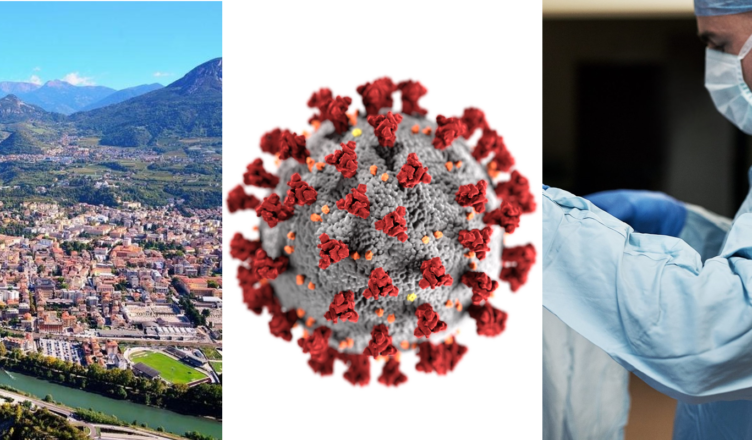
Cover Image: The battle against the new coronavirus, SARS-CoV-2, is underway throughout Italy, especially in the north where the epidemic is widespread. In Trento, as everywhere, the front is guarded by thousands of doctors and nurses. Dr. Enrico Sorrentino is one of them.
Italiano Русский«Sooner or later the ideal weapon to win, the vaccine, will come.” But until then the only real weapon we have to prevent and stop the virus is the “Social Distancing”: everyone must keep a safe distance from the others, none excluded.»
It is not the opinion of one of the super experts that we are interviewing these days. It is one of the tens of thousands of doctors who are on the front of the “war”on the SARS-CoV-2 coronavirus in Italy, with the others tens of thousands of nurses, ambulance drivers, rescue volunteers, policemen, firefighters, etc. An army of public workers who are working tirelessly, often day and night, to treat and assist whoever needs help… The citizens now they call them “their heroes”, but they answer that they do their duty, the job they have chosen. And that citizens, if they want to help them, have to do only one thing: STAY AT HOME! … Let’s try to understand why.
Interview cared by Elena Buldakova
 Dr Enrico Sorrentino is a surgeon who graduated in Italy, in Rome. After spending a few years in Vancouver, Canada, he recently arrived in Trento, a splendid city in the middle of the Alps, the mountain range that acts as a border for the whole of Northern Italy, dividing it from the rest of Europe. He is now more than ever engaged on two frontiers: with grueling shifts at the Medical Guard service (provided 24 hours a day), but also as a Family Doctor (in Italy the National Health Service assigns 1,500 patients to each Family Doctor, a free service).
«Now there is only a way to avoid coronavirus infection: isolation, and isolation again and again isolation!»
It is the heartfelt appeal of Dr. Sorrentino, who recommends it to become the mantra for all the countries of the world.

Although the United States and Spain have just passed Italy for the number of people infected with the new coronavirus, the mortality rate for the new type of coronavirus (SARS-CoV-2) on the Italian peninsula is still the highest. According to official information by the Italian Ministry of Health, up to yesterday, April 3, 2020, the number of deaths from complications caused by coronavirus has reached 14,681 people, including 77 doctors.
Since the outbreak in Italy, 119,827 people have contracted the new type of coronavirus, a figure that includes 85,388 positive cases, 14,681 deaths and 19,758 recovered people. Currently, 4,068 people are cured in intensive care units.
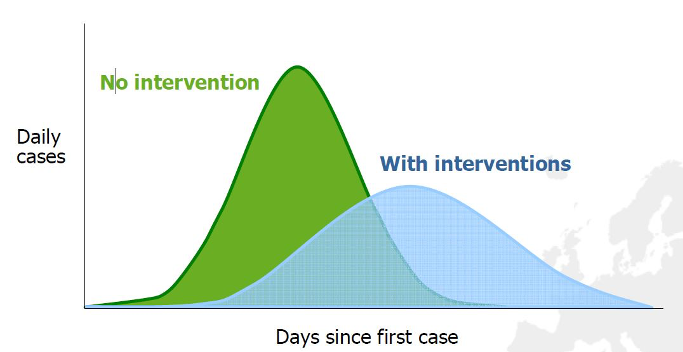
The serious quarantine measures introduced throughout Italy from March 10 to prevent the spread of coronavirus infection, strategic weapon in the fight against the pandemic, will last at least until April 13, when the Christian Easter will be celebrated with a prolonged end in early May. This was stated by the president of the Istituto Superiore di Sanità d’Italia (ISS), Silvio Brusaferro.
According to the president of the ISS, the application of the restrictive measures is necessary to reduce the number of new infections in the following days and to quickly get out of this situation. Brusaferro once again stressed the attention on compliance with restrictive measures and isolation.
Is self-isolation, technically termed “social distancing”, really a way of preventing the human body from contracting the coronavirus? And what to do in case of first symptoms?
Planet 360.info journalists have asked these and other questions to Dr. Enrico Sorrentino, who all these weeks has been working together with his colleagues as part of what is called “the first line” of the battle, all together in a strenuous fight to save the lives of their patients.
The Interview ————————————–
Dr. Enrico Sorrentino, we receive many calls from journalists from the countries of Central Asia, Russia, Latin America, etc. They ask us to clarify how serious this new virus is and if there is really an urgent need for isolation even in their countries, still having few identified cases of infected people. People don’t believe that quarantine is the right measure … or they would like to delude themselves that it can be avoided.
– Enrico Sorrentino – The ONLY way to prevent mass contagion, an epidemic that may potentially affect the whole population, is to impose social distancing, the isolation of each person from all the others. If this is a realistic and convenient way for countries like Italy, where healthcare facilities are a bit more developed, they can imagine how necessary it is in the less fortunate countries from that point of view.
Personally, I am quite disappointed by the outrage that some journalists and a part of the public that are protesting against the obligation to stay at home, as if there was no way to endure it; and that they are so tired of not being able to return to normal life!
It is better to stay at home and read books (a habit that seemed lost by now) rather than ending up in the hospital, where people suffer and it is particularly easy to take other diseases.
But what should people do when the first symptoms appear? Call an ambulance and go to the hospital?
– Enrico Sorrentino – At the first symptoms it is better to stay at home and treat them with the appropriate treatments: if the temperature is high you need to take an antipyretic; if your throat is sore you need cough tablets and syrups, etc. This will improve the situation and only if it gets worse is it necessary to go to the hospital.

I must also mention the doctors of Bologna, under the direction of Professor Pierluigi Viale. Porf. Viale has a different opinion and proposed a new approach to his colleagues that agreed. His team of doctors recommends that physicians do not just treat it as a normal flu and wait for the symptoms to get worse. Instead, they should treat patients with the administration of early therapeutic prophylaxis, even while the symptoms are still mild. It consists in hydroxychloroquine, an antimalarial, associated with antivirals and possibly with antibiotics. In Bologna everyone now adheres to this treatment protocol. If the results prove them right, the protocol will be adopted by the whole Emilia Romagna region and perhaps also at national level.
– Every day, on national TVs, the figures on the number of infected and dead people are updated. But do they refer to the deaths caused directly by the coronavirus?
– Enrico Sorrentino – No, these are general statistics. For example, many people, especially the elderly, die at home. And it is not always possible to establish the cause of their death since there is not enough evidence to establish it.
But the fact that coronavirus is the cause of many people’s death is obvious. I give you the example of Bergamo, where a local daily newspaper, Eco di Bergamo, conducted an investigation and it was found that, compared to the same period last year, this year from late January to late March there has been a sharp increase in mortality, 5 (five!) times higher!
– Many people are not happy that they are told that they must take care of themselves at home and have medical assistance only when the situation is already bad … The reason for this is the lack of places in hospitals?
– Enrico Sorrentino – No. The fact is that this new type of virus behaves very aggressively, giving serious complications to one of the main vital organs of the human body: the lungs. And usually this comes to cause pneumonia. When a person has other diseases, such as diabetes, oncological degenerations, etc., coronavirus is added, further engaging the immune system, which is not always able to resist even this attack. In this battle, whoever has sufficient strength wins. But anyone who is weakened by other serious and demanding pathologies or is too weak in constitution (especially the elderly, but also infants afflicted by other pathologies), can be defeated and brought to death.

As for hospitals. As a doctor I have to reiterate once again that hospitals are the very first bacteria farms. It happens that a person with an appendicitis attack enters the hospital to face the operation that removes it, but while he is in the ward he takes another infection and the body cannot bear it.
Furthermore, it is precisely in a hospital that the various patients bring viruses and bacteria, which end up populating that environment. This creates a struggle for survival among these microorganisms, which in order to win must evolve quickly, changing their nature to become stronger and more aggressive. So, unless disinfection is constant and widespread, in hospitals it is very easy to come across super-bacteria and viruses modified for the worse.
– Doctors and nurses are also at risk. To date, 77 doctors have already died during the fight against coronavirus…
– Enrico Sorrentino – Unfortunately, it is so. We are not protected enough. A colleague of mine is dead. We are given only one protection kit every day: a mask and a lab coat.
But this is enough to visit only one patient, not more! And every day we are dealing with a significant number of sick people. Furthermore, often we, family doctors or medical guards, have to go to the home of patients who have died to check and certify their death. It is clear that if a person died of a coronavirus, family members can also be infected and the doctor can become infected by them and become an additional source of spread of the virus. We try to keep an adequate distance, but there are still few guarantees. So doctors are unprotected, unfortunately.
– But Trento is one of the two richest and most developed regions in Italy. How can it be that the masks are still missing?
– Enrico Sorrentino – Yes, they are not enough, at least for the moment. Unfortunately, if the whole world was not ready for an epidemic of this magnitude, Italy for some time no longer produces masks to protect the mouth and nose, because it is cheaper to let them produced in developing or poor countries and buy them from those countries. Now we are rebuilding the production chain in Italy, but this process takes time.
– In recent months, several versions have been announced regarding the origin of this new coronavirus (SARS-CoV-2). Some refer to its possible artificial and non-natural origin, defining the coronavirus as a biological weapon. Others argue that it is a virus of natural origin.
What do you think is the most credible hypothesis?
– Enrico Sorrentino – There are many falsehoods and fake news associated with the coronavirus. But surely it is a virus of natural origin, which can mutate in animals until it becomes transmissible to people and between people. The same process occurred from cows, pigs, chickens and other animals. Obviously, manipulations are possible, but they must be proved.
– Coronavirus is also said to be related in some way to the development of 5G and that Wuhan (China) is used as the project’s polygon.
– Enrico Sorrentino – a little too far from reality. Let’s take Italy as an example, which is an old European state. In many Italian cities, 4G does not yet exist or is too weak, the so-called “telematic highways” are a reality only in some areas of the country. The situation is similar in many other countries. I could understand such a hypothesis in a nation with highly developed telematic technology like in South Korea, but where is it possible in Italy?! In Milan?! But in other cities there is no such adequate infrastructure.

– What would be the most important advice to give to the governments and people of other countries in which they are identifying the first infections?
– Enrico Sorrentino – I repeat it once again: INSULATION, INSULATION AND STILL INSULATION.
Don’t wait or hesitate too long. The whole community would pay the consequences at a high price, also and above all in terms of human lives.
________________________________


